
55 road accidents, 20 deaths every hour.
The toughest part is to tackle human behaviour. On the Atal Setu, says Indrajit Gupta, I chose to drive at a consistent speed of 80 kmph in the middle lane. Vehicles on the right lane were clipping along at 150 kmph, way over the maximum permissible limit of 100 kmph. On occasion, I had to slow down or dodge vehicles suddenly pulling into the middle lane from the side.
Indian roads continue to be among the most dangerous in the world. Few people are even aware that the Good Samaritan Law exists. Getting a licence to drive is still far too easy.
Around 96 per cent bystanders in the national capital are reluctant to help road accident victims with serious injuries as they fear that they would be subjected to legal hassles and mistreatment by police, said a study.

Many of the tragedies occurred in the dark, which is when it is cooler to walk, and many people were caught in their sleep. The combination of no traffic and speeding vehicles has led to havoc, endangering the lives of those who found themselves without work or money in the coronavirus-induced lockdown and were frantic to get home, any which way.
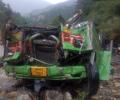
The private bus (bearing registration number HP 66-7065) fell into the over 300-metre-deep nullah near the Dhoth Morh in Banjar tehsil of the district, Kullu Superintendent of Police Shalini Agnihotri said.

'Approach people with respect, mindful that they know their job better than you do, and that you're not superior to them just because you may be better educated or their boss.' Skoda Auto VW India MD Gurpratap S Boparai cites his management credo to Pavan Lall.

Ride-hailing services are also lobbying the government for the recognition of a new category for motorcycle-shared services, where the owner should not have to take a commercial licence. Pooled services is another area where taxi aggregators are hoping to make the government listen to them.

Any NGO critical of the government is unlikely to receive a green signal. The new amendment will leave NGOs vulnerable to harassment. It was the NGO sector that helped provide compassion and food to millions of people during the lockdown. The new Bill will render such cooperation and camaraderie impossible in future, observes Rashme Sehgal.

'From what I saw on the road that day it was evident that people want to help.' 'But they also need to have the confidence that their well-intentioned actions will not boomerang on them,' says Veenu Sandhu.

The migrant workers were walking along the rail tracks apparently to escape the attention of police. A video clip from the scene of the tragedy shows the bodies of migrant workers lying on the tracks and nearby with their meagre personal belongings scattered around.

Indian roads are far more unsafe than its railways. A sense of urgency is required to tackle India's embarrassing record on road safety.
Drunk driving can attract a fine up to Rs 50,000.
 © 2026 Rediff.com - Advertise with us - Disclaimer - Privacy Policy - Sitemap - Feedback - About us - Terms of use - Grievances